
Office of the
Illinois Attorney General
Kwame Raoul
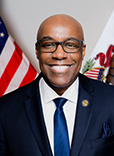
Chicago – Attorney General Kwame Raoul today, as part of a coalition of 17 attorneys general, filed an amicus brief in support of a lawsuit challenging the Trump administration’s erosion of a long-established, successful program offering economic opportunities to blind Americans.
The Randolph-Sheppard Act, enacted in 1936, established a cooperative federal-state program giving blind vendors priority to operate food service and other vending facilities on federal property, including military installations. Through designated state licensing agencies, Illinois and other states recruit, train, license and support blind vendors, generating program revenue that funds those very functions. In December 2025, the U.S. Secretary of Education gave the U.S. Army a broad, Army-wide exemption from the law, stripping away the opportunity for blind vendors to be prioritized in contracting to operate dining facilities, based on claims of cost concerns and isolated performance issues.
“This decades-long partnership has created opportunities for stable employment and promoted entrepreneurship for blind Americans,” Raoul said. “I join my colleagues in support of this legal challenge to an unlawful and overly broad exemption that would effectively remove blind vendors from consideration for military dining contracts across the country.”
In their amicus brief, filed in Taylor v. U.S. Department of Education, Raoul and the coalition argue that the secretary’s decision ignores that, overall, blind vendors have operated dining facilities efficiently and to the satisfaction of the military itself. The coalition further argues that the cost concerns cited by the secretary do not hold up to scrutiny. Labor and food costs at military dining facilities are largely set by federal law and military procurement systems, not vendor discretion. Issuing a sweeping, nationwide waiver based on isolated examples and incomplete reasoning, while ignoring this broader context, undermines Congress’ intent to empower blind Americans to support themselves and provide valuable services to the federal government, including the military.
Raoul and the attorneys general note that military dining facilities generate revenue that states use to compensate blind vendors and fund vendor training, equipment and program administration. The loss of that pipeline will weaken the infrastructure that supports blind vendors statewide. Curtailing the Randolph-Sheppard priority also reduces the very business opportunities Congress designed the program to protect, leaving blind residents with fewer avenues to achieve economic independence.
Attorney General Raoul is joined in filing the brief by the attorneys general of California, Colorado, Connecticut, Delaware, District of Columbia, Maine, Maryland, Massachusetts, Michigan, Minnesota, Nevada, New Mexico, New York, North Carolina, Oregon and Virginia.


